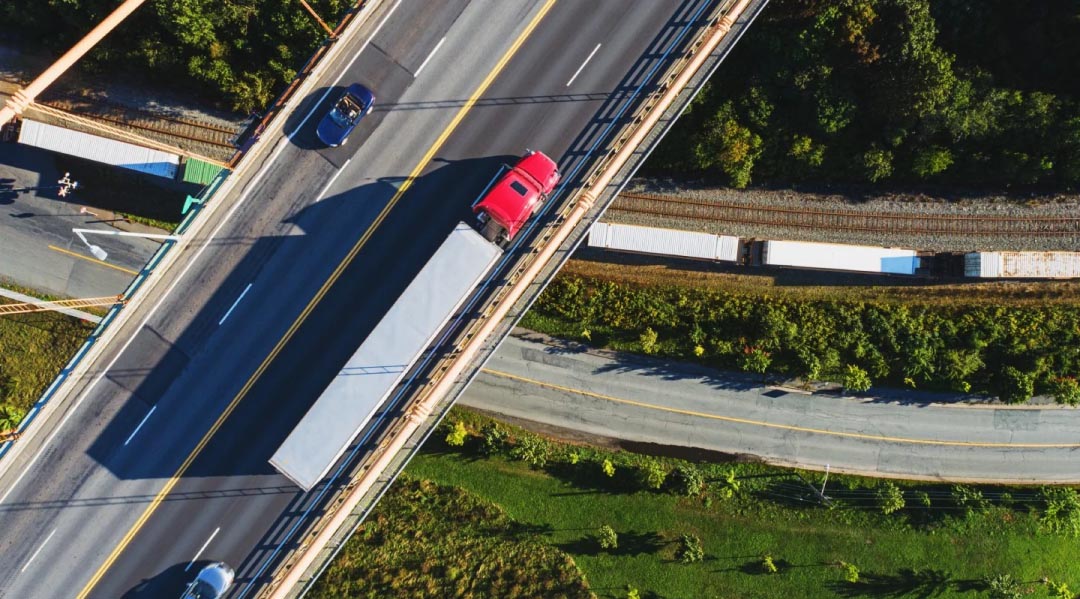
Since the second half of 2022, the operating companies of rail intermodal transportation in the United States have been surrounded by labor contract crises ...
While the state of the U.S. trucking business in 2023 remains largely uncertain, analysts at Freight Transportation Research see a severe recession as unlikely.
FedEx, Amazon, and UPS are trying different ways to preserve profit margins in their parcel businesses. FedEx is further scaling back its Sunday delivery .....
Industries across the globe continue to grapple with supply chain disruptions. They're working to optimize execution, reduce risk, increase agility, and …..
Flexport's co-CEO announced the global layoff of 20% in a letter to internal employees. The letter stated that the layoffs will affect all departments around .....
Here's a list of the top 10 largest shipping carriers based on TEUs by the year Jan 2023. According to Alphaliner, MSC increased capacity by 7.5% in 2022 ....
Vessel position data showed there were only 30 container ships at ports across the nation on Friday. All queues are reduced to single digits per port ....
In the past two years, international shipping companies have actively or passively expressed their views on decarbonization strategies. Shipping companies ……
Amazon CEO Andy Jassy confirmed that set to layoffs 18,000 jobs, which is much higher than the 10,000 Amazon planned to cut in early November last year .....
In 2022, global e-commerce sales are expected to exceed 5 trillion US dollars for the first time, accounting for 1/5 of the total retail sales. In 2025 .....
Many macroeconomic and geopolitical challenges, as well as significant lessons about risk and disruption Supply Chain Brain combines research and analysis of ..
The editorial team at Digital Commerce 360 gives their predictions. After three years of the pandemic that pushed U.S. e-commerce sales a big step forward....
The problem of port congestion in the United States: at present, the problem has been largely solved. However, it should be noted that the current state of …..